
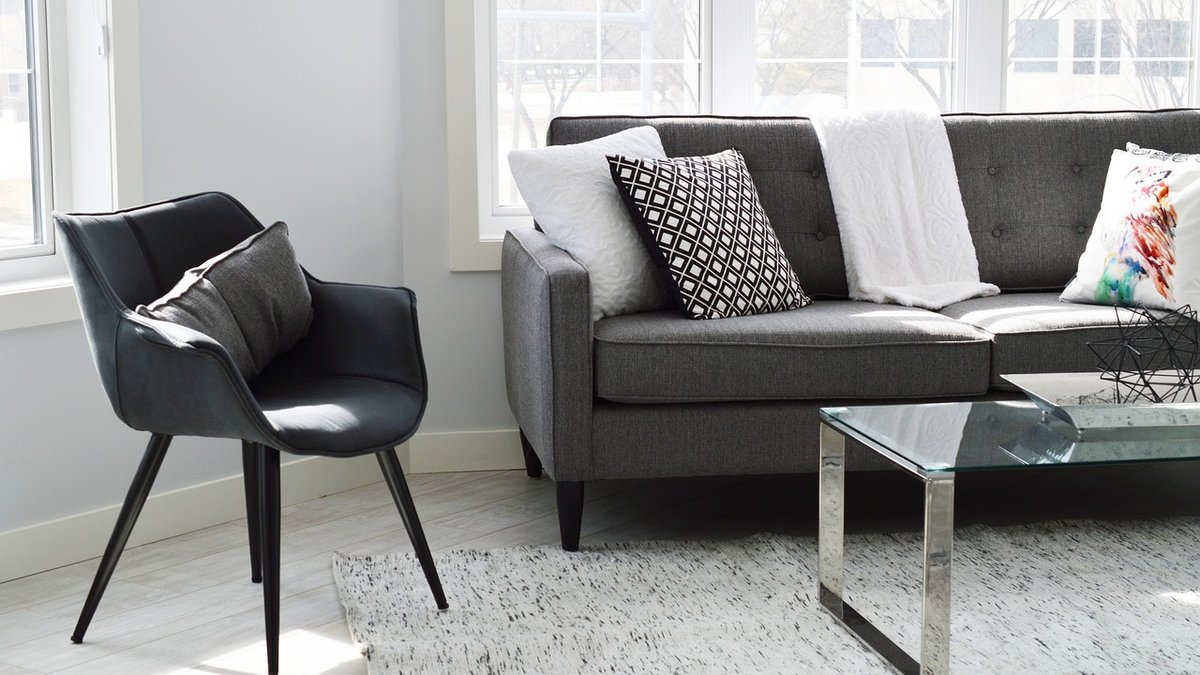
A reading nook is one of the few decorating ideas that gives you something back every single day. It costs very little, takes up perhaps a square metre, and turns a neglected corner into the most-used seat in the house. The trick in a small living room is to build it from three pieces — an armchair, a slim side table, and a warm floor lamp — and to resist adding anything else. Here is how to get it right.
Before you buy anything, walk around the room and look for the spot that already feels slightly overlooked. A corner beside a window, the alcove next to a chimney breast, the space behind the sofa that nobody quite knows what to do with. All of these work beautifully.
A reading nook needs roughly 1.2 metres by 1.2 metres of floor space to feel generous, and it can manage on less if the chair is well chosen. Measure the corner properly, including skirting boards, radiators, and the swing of any nearby door. Then check the walkway past it: you want at least 60 to 70 centimetres of clear floor so people can cross the room without crabbing sideways.
One more thing worth checking before you commit. Sit on the floor in that corner at the time of day you would actually use it. If you are squinting into a glare or staring at a blank wall, you may want to angle the chair slightly rather than pushing it flat against both walls. A chair turned 20 or 30 degrees into the room nearly always looks more inviting.
The armchair is the anchor, so get this right and everything else falls into place. Look for a chair around 75 to 85 centimetres wide, with a seat height of 42 to 45 centimetres and a seat depth of no more than 55 centimetres unless you are tall. Deeper chairs swallow a small room and are harder to get out of.
A side table for a reading nook does not need to be substantial — it needs to hold a mug, a pair of glasses, and the book you are not currently holding. Aim for something 35 to 45 centimetres wide and around 50 to 55 centimetres high, so the top sits level with or just below the chair arm.
Round tops soften a corner full of right angles and are kinder on shins. Glass, metal, or a light wood will keep the corner feeling airy, and a single slim pedestal base takes up less visual space than four chunky legs. If you are very tight for room, a nesting set of two tables is a clever buy — one for the mug, one pulled out for a visitor or a plate of toast.
Keep the surface almost clear. A small stack of two or three books and a little dish for odds and ends is plenty. Clutter on a small table looks twice as heavy as clutter anywhere else.
This is the piece that turns a chair in a corner into somewhere you actually want to sit. Choose a floor lamp roughly 150 to 165 centimetres tall with a slim stem and a base no wider than 25 centimetres, so it tucks behind the chair without becoming a trip hazard.
Position it behind and slightly to one side of your shoulder, not in front of you. That way the light falls across the page rather than into your eyes, and the corner glows warmly from behind. An adjustable head or a swing arm makes this much easier to fine-tune.
For the bulb, look for something around 2700K — often labelled warm white or soft white — and avoid cool white entirely. A dimmable bulb is worth the small extra cost, and a fabric or opal shade will diffuse the light so it feels like candlelight rather than a spotlight. If you can only add one thing to a dark corner, make it this lamp.
Now make it somewhere you can stay for an hour. A small rug, perhaps 120 by 170 centimetres, will define the nook and stop the chair from looking stranded on bare floor. A sheepskin or a flat-weave runner works just as well if space is genuinely tight.
The reason this approach works in a small living room is restraint. Three pieces, one corner, no clutter. Resist the urge to add a bookcase, a plant, and a footstool as well — each one nibbles at the clear space that makes the nook feel comfortable rather than crammed.
If storage is a genuine problem, go upwards instead of outwards. A single floating shelf above the chair, around 25 centimetres deep, holds a dozen paperbacks without touching the floor. And keep the walkway past the nook swept clean at all times, because a clear route through the room is what makes a compact space feel generous. Get those three pieces right, and you will find that the smallest corner in the house becomes the one everybody wants.

Hi, my name is Anthony kuber. I am artist and fashion designer.
I love to travel and writing blogging.
Your email address will not be published. Required fields are marked *
Software Developer & Writer
Hey, I'm Diva, a developer and writer blending code and creativity. I'm driven by a deep curiosity and a relentless pursuit of excellence. Join me as I craft digital solutions and captivating stories.


